Minebea

Hansen Quick Contact
Need to hear from us -- fast? Fill out and send the form below and a representative will contact you shortly.
First name  
Last name  
Phone  
Email  
Please select one:
OEM
Replacement Part


ISO 9001 ISO 14001


AC Synchronous Motors

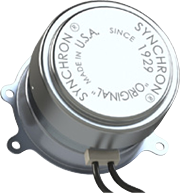
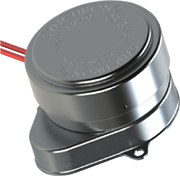
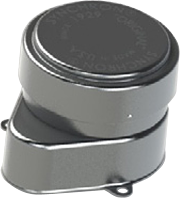
Synchronous motors are inherently constant-speed motors and they operate in absolute synchronism with line frequency. Hansen offers both Hysteresis and Permanent Magnet synchronous motors to meet your exact needs. The hysteresis design, Hansen's famous Genuine Synchron®, is extremely quiet and smooth in operation and has very low cogging torque, ideal for back-driving. Because it is light in torque, it is always attached to a Hansen ultra precision gearbox. The permanent magnet motor design offers higher torque and is available with or without a gearbox. The high strength magnets create substantial cogging torque, making these synchronous motors ideal for applications where you need to hold position after removing power.

As with squirrel-cage induction motors, speed is determined by the number of pairs of poles and is always a ratio of the line frequency.

Synchronous motors are made in sizes ranging from subfractional self-excited units to large-horsepower, direct-current-excited motors for industrial drives. In the fractional-horsepower range, synchronous motors are used primarily where precise constant speed is required.

In large horsepower sizes applied to industrial loads, synchronous motors serve two important functions. First, it is a highly efficient means of converting ac energy to mechanical power. Second, it can operate at leading or unity power factor, thereby providing power-factor correction.

There are two major types of synchronous motor: nonexcited and direct-current excited.

Nonexcited Synchronous motors are made in reluctance and hysteresis designs. These motors employ a self-starting circuit and require no external excitation supply.

Dc-excited Synchronous motors come in sizes larger than 1 hp, and require direct current supplied through slip rings for excitation. Direct current may be supplied from a separate source or from a dc generator directly connected to the motor shaft.

Single-phase or polyphase synchronous motors can't start without being driven, or having their rotor connected in the form of a self-starting circuit. Since the field is rotating at synchronous speed, the motor must be accelerated before it can pull into synchronism. Accelerating from zero speed requires slip until synchronism is reached. Therefore, separate starting means must be employed.

In self-starting designs, fhp sizes use starting methods common to induction motors (split-phase, capacitor-start, repulsion-start, and shaded-pole). The electrical characteristics of these motors cause them to automatically switch to synchronous operation.

Although the dc-excited motor has a squirrel cage for starting, called an amortisseur or damper winding, the inherent low starting torque and the need for a dc power source requires a starting system that provides full motor protection while starting, applies dc field excitation at the proper time, removes field excitation at rotor pull out (maximum torque), and protects the squirrel-cage winding against thermal damage under out-of-step conditions.

Pull-up torque is the minimum torque developed from standstill to the pull-in point. This torque must exceed load torque by a sufficient margin so that a satisfactory rate of acceleration is maintained under normal voltage conditions.

Reluctance torque results from the saliency (preferred direction of magnetization) of the rotor pole pieces and pulsates at speeds below synchronous. It also has an influence on motor pull-in and pull-out torques because the unexcited salient-pole rotor tends to align itself with the stator magnetic field to maintain minimum magnetic reluctance. This reluctance torque may be sufficient to pull into synchronism a lightly loaded, low-inertia system and to develop approximately a 30% pull-out torque.

Synchronous torque is torque developed after excitation is applied, and represents the total steady-state torque available to drive the load. It reaches maximum at approximately 70° lag of the rotor behind the rotating stator magnetic field. This maximum value is actually the pull-out torque.

Pull-out torque is the maximum sustained torque the motor develops at synchronous speed for one minute with rated frequency and normal excitation. Normal pull-out torque is usually 150% of full-load torque for unity-power-factor motors, and 175 to 200% for 0.8-leading-power-factor motors.

Pull-in torque of a synchronous motor is the torque that it develops when pulling its connected inertia load into synchronism upon application of excitation. Pull-in torque is developed during transition from slip speed to synchronous speed, as the motor changes from induction to synchronous operation. It is usually the most critical period in starting a synchronous motor. Torques developed by the amortisseur and field windings become zero at synchronous speed. At the pull-in point, therefore, only the reluctance torque and the synchronizing torque provided by exciting the field windings are effective.